
The traditional brocade weaving craft in Luống Nọi Village, Ngọc Đào Commune, Hà Quảng District, Cao Bằng Province, has been carefully preserved and developed by the local Tày community for generations. Today, brocade products not only represent an important part of local cultural identity but also contribute significantly to tourism development in Cao Bằng.
In 2023, the traditional brocade weaving craft of the Tày people in Ngọc Đào Commune was recognized by Vietnam’s Ministry of Culture, Sports and Tourism as one of Cao Bằng Province’s 12 National Intangible Cultural Heritage elements. In order to preserve and further promote this traditional craft, local authorities and the tourism sector have introduced a number of conservation and development initiatives.
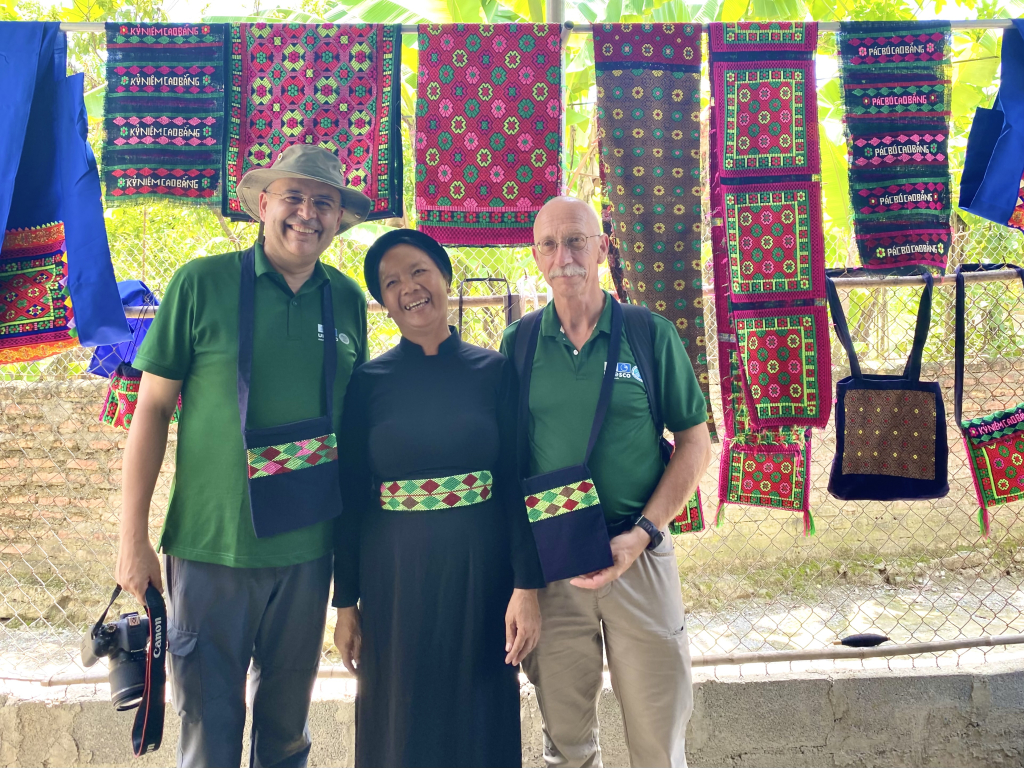
Luống Nọi – A Cultural Heritage Village in the UNESCO Global Geopark
Luống Nọi Village is located along the northern tourism route, known as the “Journey to the Roots”, within the UNESCO-recognized Non Nước Cao Bằng Global Geopark.
The village is home entirely to ethnic Tày people. According to local authorities, Luống Nọi has 83 households with more than 300 residents.
In the past, almost every family in the village practiced traditional brocade weaving. However, since around 2012, the number of households maintaining the craft has decreased to approximately 30.
The brocade weaving tradition of the Tày people in Luống Nọi has existed for generations. It developed naturally from a traditional self-sufficient way of life, when local families produced their own textiles and household items.
The Art and Meaning Behind Tày Brocade
Traditional Tày brocade is distinguished by its intricate patterns woven onto indigo-dyed fabric.
The sophisticated weaving techniques, delicate motifs and harmonious combinations of colors demonstrate the remarkable craftsmanship, creativity and aesthetic sense of Tày women.
For the local people, brocade patterns are much more than decoration. Through different motifs, artisans express their emotions, aspirations and view of life.
The designs reflect everyday agricultural activities, relationships between people, local traditions and the close connection between humans and the natural environment.
Among the households that continue to preserve the craft, the family of artisan Nông Thị Thược is one of the most active in Luống Nọi.
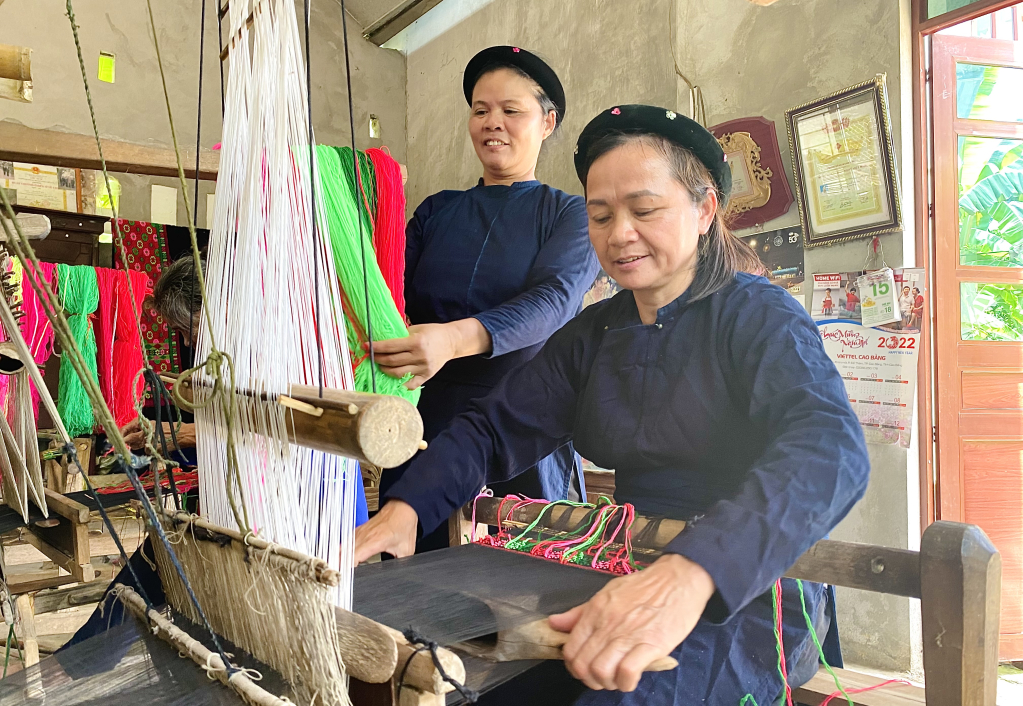
A Unique Weaving Technique
According to artisan Nông Thị Thược, Luống Nọi brocade is characterized by a harmonious combination of patterns, colors and lines.
Light and dark shades, as well as warm and cool colors, are skillfully arranged to create distinctive designs. This sophisticated use of color gives Luống Nọi brocade its own recognizable identity.
One of the most remarkable features of the local weaving technique is that artisans create the decorative patterns from the reverse side of the fabric, rather than weaving them directly from the front as in many conventional textile techniques.
Traditional tools include a wooden loom and shuttle. Flexible bamboo sticks are arranged on the loom to help artisans create complex decorative patterns.
The motifs generally fall into three main categories:
- Geometric patterns
- Plant-inspired motifs
- Animal-inspired motifs
Some textiles also feature religious and spiritual patterns traditionally associated with the clothing of Then and Tào ritual practitioners among the Tày people.
Common colors include blue, red, yellow, purple, white and black. From these basic colors, artisans create different shades and combinations depending on the design and purpose of each product.
Brocade as a Reflection of Tày Culture
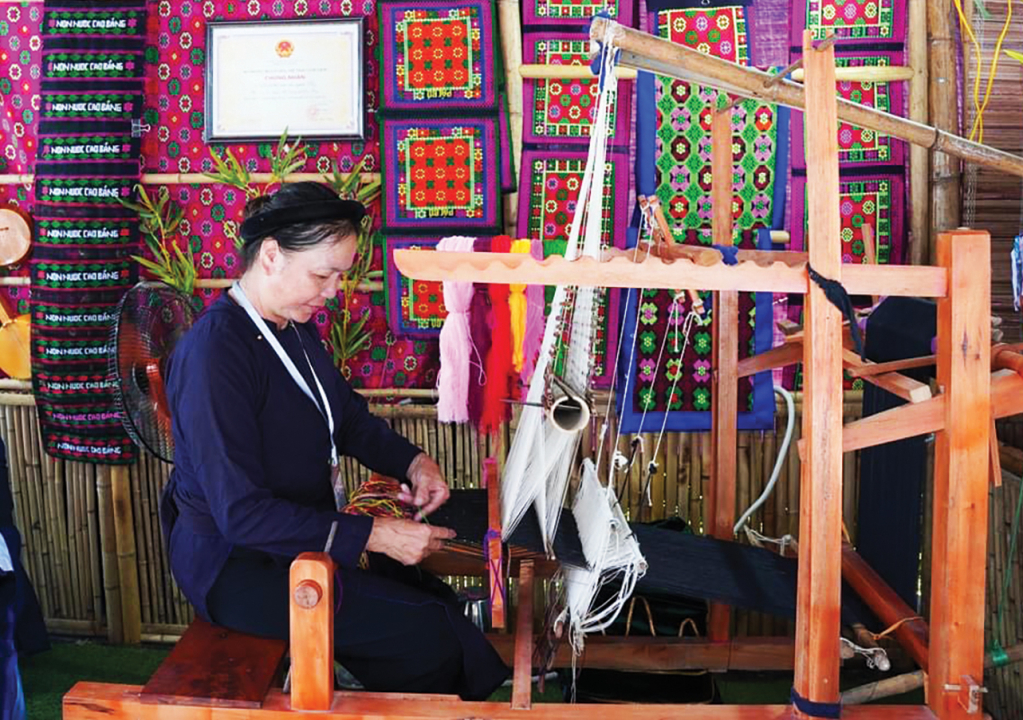
Holding a piece of traditional Tày brocade, visitors can immediately appreciate the diversity of its colors, lines and decorative forms.
Many designs are symmetrical and carry symbolic meanings associated with harmony, longevity and the relationship between humans and the universe.
Some motifs are also connected with traditional concepts of yin and yang and the five elements, reflecting philosophical ideas that have influenced the cultural life of local communities for generations.
In earlier decades, especially during the 1980s, almost every household in Luống Nọi owned one or two weaving looms.
Girls traditionally learned how to weave from an early age. They produced clothing, baby carriers, blankets, pillowcases and other household textiles.
These handmade products were used by families, prepared as part of a woman’s dowry or sold at traditional markets throughout Cao Bằng Province.
From Traditional Craft to Tourism Experience
Today, visitors traveling through northern Cao Bằng can experience the brocade weaving process directly in Luống Nọi.
Tourists have the opportunity to meet local artisans, learn about traditional looms, observe the different stages involved in making brocade and discover the cultural meanings behind the patterns.
Many visitors are particularly impressed by the craftsmanship and the way the designs reflect the landscapes, nature and cultural traditions of Cao Bằng’s mountain communities.
Traditional brocade products are still widely used in local daily life and ceremonies. They can be found in altar decorations, traditional clothing, hats, scarves, pillowcases, blankets, baby carriers, handbags and many other handmade items.
At the same time, artisans are developing new products suitable for modern customers and travelers.
According to local artisans, brocade from Luống Nọi has attracted customers from many parts of Vietnam, including Hanoi, Thái Nguyên, Bắc Kạn, Hòa Bình and Ho Chi Minh City.
International travelers from countries such as Belgium, the United Kingdom, France and Germany have also shown interest in Tày brocade products.
Some customers order traditional textiles to make áo dài, blankets, bed linen, pillowcases and decorative products.
Preserving the Craft for Future Generations
The recognition of Luống Nọi brocade weaving as a National Intangible Cultural Heritage has created new opportunities for both cultural preservation and community-based tourism.
The Cao Bằng tourism and cultural authorities aim to connect traditional handicrafts with tourism experiences, turning Luống Nọi into a distinctive cultural destination within the Non Nước Cao Bằng UNESCO Global Geopark.
Future plans include supporting training programs for local artisans, improving weaving skills, encouraging families to maintain traditional looms and developing a wider variety of brocade products.
Authorities also hope to improve product quality, expand market opportunities and promote Luống Nọi to both domestic and international visitors.
By combining cultural preservation with sustainable tourism, the traditional brocade weaving craft can continue to provide income for local families while ensuring that the knowledge, techniques and cultural identity of the Tày people are passed on to future generations.
A Meaningful Cultural Experience in Cao Bằng
A visit to Luống Nọi is more than simply an opportunity to purchase a handmade souvenir.
It offers travelers the chance to understand the traditions, creativity and everyday life of the Tày people while meeting the artisans who continue to preserve one of Cao Bằng’s most distinctive traditional crafts.
For visitors exploring the Non Nước Cao Bằng UNESCO Global Geopark, Luống Nọi Brocade Weaving Village is a meaningful cultural stop where heritage, craftsmanship and community life come together.
Source: www.tourcaobang.vn